
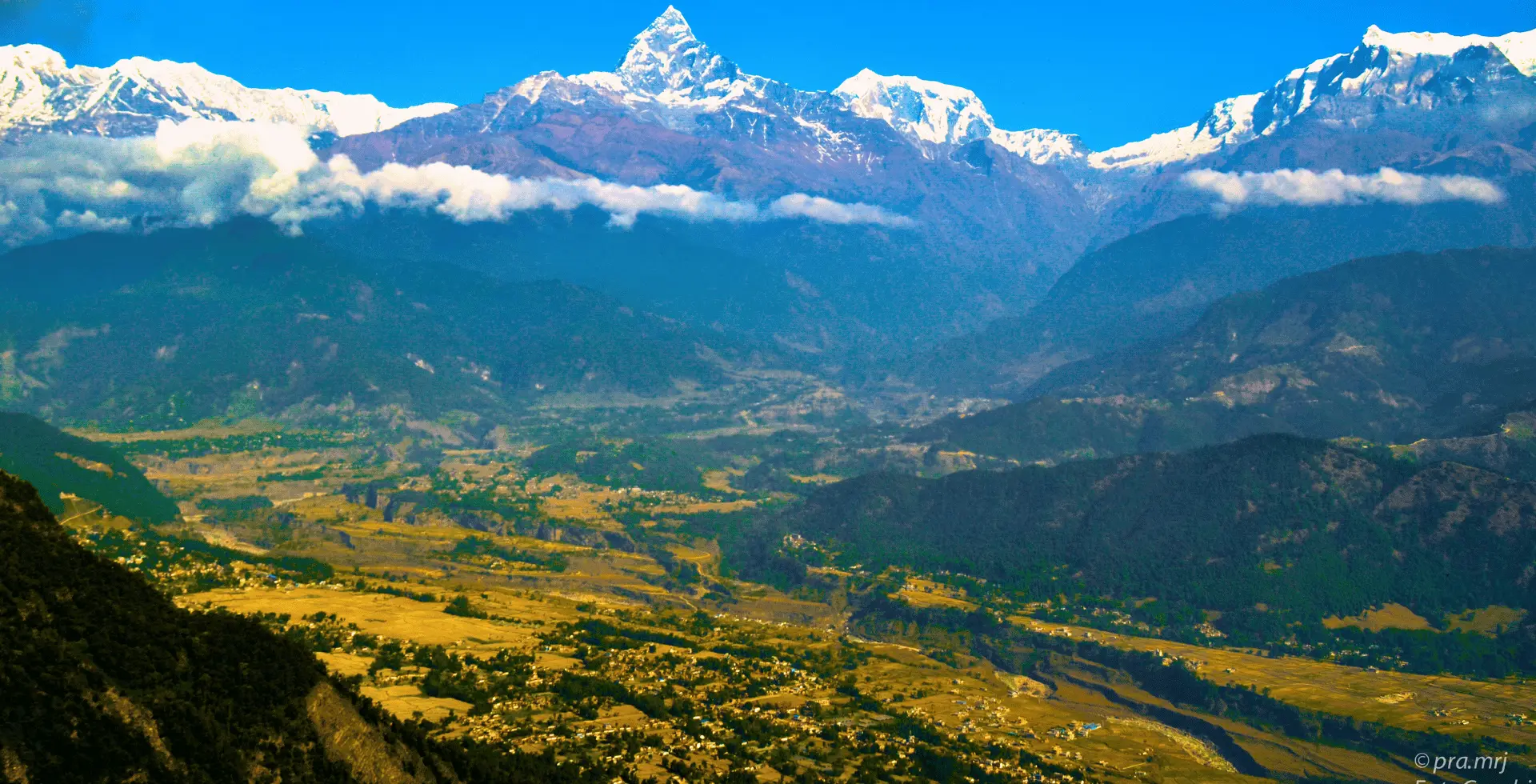
For a country with Himalayan peaks, living goddess traditions, and jungle safaris, Nepal remains oddly underrated as a "big trip" from India — mostly because people assume it needs the same visa hassle as everywhere else abroad. It doesn't. Here's what actually makes Nepal one of the most frictionless international trips available to Indian travelers, and how to time it right.
Do Indians need a visa for Nepal?
No — and this isn't a limited exception, it's a genuine open-border arrangement. Under the Indo-Nepal Treaty of Peace and Friendship, Indian nationals can enter Nepal visa-free for any purpose — tourism, pilgrimage, business — with no processing time, no online application, and no visa fee to budget for. You'll need proof of Indian nationality: a valid passport or an original Election Commission Voter ID card work at land borders, though if you're flying (the likely route for a Kathmandu-based itinerary), carrying a passport is genuinely the safer call, since airlines typically expect one at check-in even though Nepal itself doesn't require it. One document to skip entirely: Aadhaar alone isn't accepted as valid travel proof for Nepal, so don't rely on it as your sole ID.
Best time to visit Kathmandu, Pokhara, and Chitwan
Nepal's spring (March-May) and autumn (September-November) are consistently the two windows every source converges on — clear skies, comfortable temperatures, and reliable mountain visibility for the Pokhara-side sightseeing that depends on it (Sarangkot's sunrise views are only worth the early wake-up if the Annapurna range is actually visible). Autumn specifically doubles as Nepal's major festival season — Dashain and Tihar bring genuine cultural energy to Kathmandu, though it also means fuller flights and higher hotel rates, so book ahead if you're targeting October-November. Winter (December-February) is a smart shoulder option specifically for the Chitwan leg — this is actually peak wildlife-viewing season there, since dry grass and cooler temperatures make rhino and wildlife sightings easier, even though Kathmandu nights get noticeably cold. Monsoon (June-August) is the one window worth avoiding for this particular itinerary, since heavy rain affects both Pokhara's mountain views and road conditions on the Kathmandu-Chitwan-Pokhara driving legs.
Why these three cities specifically work together
Kathmandu, Chitwan, and Pokhara aren't just three separate stops — they're intentionally different registers of the same country. Kathmandu is dense, sacred, and historic: temples, stupas, and living ritual (the Pashupatinath evening Aarti is one of the most atmospheric things you'll witness on any Indian-neighboring trip). Chitwan flips entirely into jungle and wildlife — the Terai lowlands, UNESCO-listed national park, and Tharu indigenous culture feel like a different country altogether from Kathmandu's hills. Pokhara closes the loop with lakeside calm and mountain drama — Phewa Lake, the Annapurna range, and a noticeably slower pace than either of the other two cities. Doing all three in one trip gives you a genuinely complete picture of Nepal rather than a single-note visit.
How many days do you actually need?
A week (6-7 nights) comfortably covers all three cities without feeling rushed — roughly 2 nights each in Kathmandu and Pokhara, and 2 nights in Chitwan for a proper safari plus a rest afternoon. Shorter trips are possible but usually mean sacrificing one city entirely; Kathmandu-Pokhara alone (dropping Chitwan) is the most common shorter variant if wildlife isn't a priority for your group.
FAQs
Can we do this trip without a guide? Yes for general sightseeing, though a local guide adds real value for the Chitwan jungle safari specifically (spotting wildlife and reading terrain) and for navigating Kathmandu's denser heritage sites — guides are available on request for an additional fee rather than bundled by default in most packages.
Is altitude sickness a concern on this itinerary? No — Kathmandu, Pokhara, and Chitwan all sit at low-to-moderate elevations well below altitude-sickness thresholds. This isn't a trekking itinerary into the high Himalayas, so no special acclimatization is needed.
What currency should we carry, and are Indian Rupees accepted? Nepali Rupee is the standard currency, though Indian Rupees (specifically notes of ₹100 and below) are often accepted informally in tourist areas — it's still best to carry Nepali Rupees as your primary currency, since ATMs can be unreliable outside Kathmandu and Pokhara.
Is Chitwan safe for families with young children? Yes, generally — the jungle safari is conducted with trained guides and follows established wildlife-viewing protocols, making it a comfortable introduction to wildlife tourism even for first-timers.
Internal link placement: close with — "Want Kathmandu, Chitwan, and Pokhara — temples, safari, and sunrise views — already planned with hotels and transfers included? See our Namaste Nepal package
