
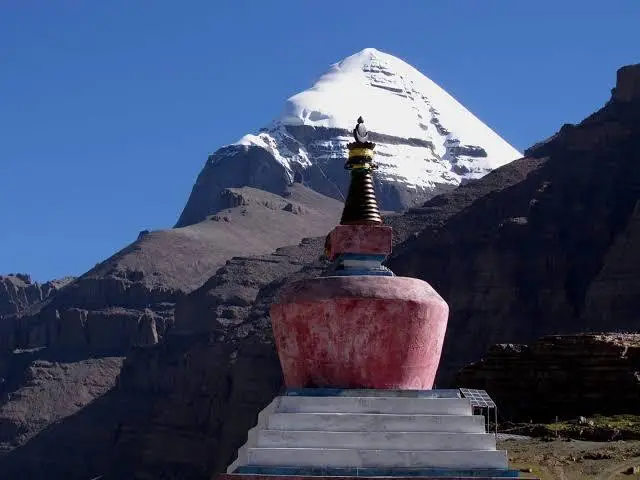
In June 2026, a group of roughly 52 Indian pilgrims travelling to Mount Kailash via the Nepal route found themselves stranded — unable to cross into Tibet because their Chinese visas and Tibet entry permits weren't fully secured before they left India. The expectation, apparently, had been that the remaining paperwork could be finalized once they reached Kathmandu. It couldn't, and the group was held up at a transit point while the situation was sorted out. Indian authorities subsequently issued a formal advisory about how fragile this particular pilgrimage corridor can be. If you're considering the Nepal route to Kailash yourself, this incident is worth understanding properly — not to scare you off, but to know exactly what separates a well-run Yatra from a risky one.
Why this happened, and why it's relevant to every Nepal-route pilgrim
The Nepal route to Kailash Mansarovar — via Nepalgunj, Simikot, and Hilsa, or via Kathmandu and the Kerung border — requires a Chinese group visa and a Tibet Travel Permit, both of which must be processed by an authorized operator well in advance of departure, not arranged on the fly once you're already in Nepal. The 2026 incident happened precisely at the seam between these two systems: Nepalese and Chinese immigration authorities coordinate tightly at the border, and any missing or mismatched document halts the entire group, not just the individual traveler. This is genuinely different from most international trips, where a paperwork gap might delay one person — here, an incomplete document can strand an entire batch of pilgrims at a remote transit point with no easy way forward or back.
What this means for choosing an operator
The practical takeaway isn't "avoid the Nepal route" — thousands of pilgrims complete it successfully every year, and it remains the most flexible option for anyone who missed India's MEA lottery for the official Lipulekh or Nathu La routes. The real takeaway is that permit and visa handling is the single most important thing to verify before you book, more than price, more than itinerary details. A responsible operator should be able to confirm, in writing, that your Chinese group visa and Tibet Travel Permit are fully processed and in hand before you leave India — not "should be ready by the time you reach Kathmandu."
Understanding your route options
Indian pilgrims currently have two broad paths to Kailash Mansarovar: the government-run MEA programme (a lottery-based system via Lipulekh Pass in Uttarakhand or Nathu La Pass in Sikkim, with limited annual slots and a fixed application window) and the private Nepal-route option (via Kathmandu, with no lottery, no quota, and flexible dates, but requiring a Chinese group visa arranged through your operator). The Nepal route itself splits further into an overland option (13-16 days via the Kerung border) and a faster helicopter-assisted option through Nepalgunj, Simikot, and Hilsa (typically 9-11 days) — the route this incident occurred on, and the one most private operators recommend for pilgrims who are short on time or want to reduce the physical toll of overland travel.
Is this trip actually safe to undertake?
Yes, with the right preparation and the right operator. The altitude and remoteness are real challenges — this isn't a trip to underestimate — but the vast majority of pilgrims who prepare properly, choose an operator with a strong permit-handling track record, and follow their trip leader's guidance complete the Yatra without serious incident. The 2026 stranding wasn't a failure of the route itself; it was a failure of documentation sequencing that a more careful process would have caught well before departure.
FAQs
Should I avoid the Nepal route entirely after this incident? Not necessarily — the route remains a well-established, widely used option. The lesson is to scrutinize how your chosen operator handles permits and visas, not to rule out the route itself.
How can I verify my operator is handling permits correctly? Ask directly whether your Chinese group visa and Tibet Travel Permit will be confirmed and in your possession before you leave India, not "arranged in Kathmandu" or "finalized closer to the date." A reputable operator should have no hesitation confirming this in writing.
How physically demanding is the Yatra, realistically? Genuinely demanding — much of the route sits above 4,500m, with the Dolma-La Pass reaching roughly 5,610m, where oxygen levels are about half of sea level. Fitness experts specializing in this Yatra generally recommend starting cardiovascular and strength training at least 2-3 months before departure, regardless of your age or prior trekking experience.
Can older pilgrims complete this Yatra safely? Yes — many pilgrims aged 60 and above complete the Kailash Yatra successfully every year, provided they prepare physically in advance and get medical clearance beforehand. Age alone isn't the barrier; inadequate preparation is.
"Considering the Nepal route with full confidence in your permits and documentation? See how our Kailash Mansarovar Yatra package handles this from day one."
